

What Are the Benefits of Bilingual in Independent Schools
Most parents don’t wake up wondering whether their child should learn a second language. They wonder whether it will help, whether it’s too much, and whether it’s worth the extra effort. Those are fair questions, and they deserve straight answers rather than vague promises about “global citizens”.
Here are the questions parents actually ask about bilingual education, with honest responses.
Isn’t learning two languages at once confusing for young children?
It’s the concern that comes up first, and it’s understandable. In practice, young children handle two languages remarkably well. Their brains are wired to absorb sound, pattern and meaning long before they analyse grammar the way adults do. Children raised across two languages may mix them briefly in early years, but this settles naturally and is a sign of learning, not muddle.
The key is consistency and immersion rather than the occasional lesson. A child hearing and using a language every day, in real situations, learns it as a living thing rather than a subject to revise.
What are the wider benefits beyond speaking two languages?
The obvious gain is communication. The quieter gains often matter more. Bilingual children tend to develop strong problem-solving skills, because switching between languages trains the brain to focus, filter and adapt. Many also show sharper listening and better memory.
There’s a cultural dimension too. A child who grows up with more than one language usually grows up with more than one way of seeing the world, which builds empathy and curiosity that stays with them.
Do these benefits fade if the child stops using the language later?
Some fluency naturally softens without regular use, as with any skill. But the underlying advantages, the mental flexibility and the confidence with unfamiliar sounds and structures, tend to last. A child who has learned one language young finds a third or fourth far easier. The foundation doesn’t disappear; it becomes a springboard.
Why do independent schools tend to lead on this?
Smaller class sizes and a willingness to design the curriculum around immersion give independent schools room to do bilingual education properly rather than as a bolt-on. Parents looking at a specialist English-Chinese bilingual school in London will find languages woven through the whole school day, from maths to art, rather than confined to a single timetabled slot.
That daily immersion is what turns a second language from an exam target into something a child genuinely thinks and plays in.
Is bilingual education only for families who already speak two languages?
No, and this is where many parents surprise themselves. Plenty of children thrive in a bilingual setting with no head start at home. What matters is the environment the school creates and the consistency of exposure. Families who speak only English often find their child becomes the household’s translator within a year or two.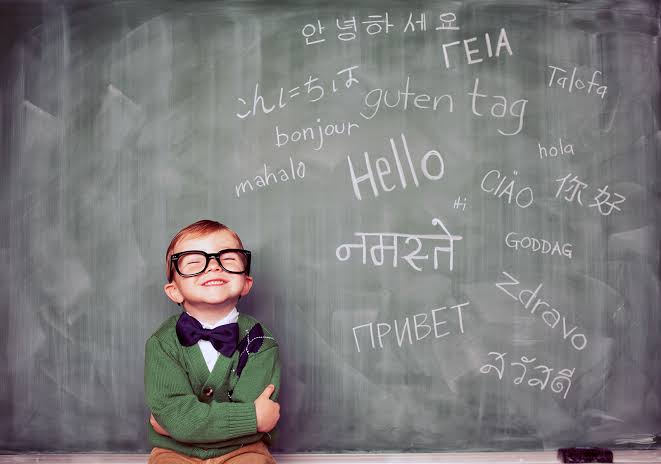
How do parents know if it’s right for their child?
Look at how the school teaches, not just what it promises. Ask whether the second language runs through everyday lessons or sits to one side. Ask how they support children who join without prior knowledge. Ask what the school day actually looks like.
A confident, well-planned programme will welcome those questions. Schools such as Kensington Wade build their entire approach around genuine immersion, and it’s worth seeing how that works in practice. More detail is available at https://kensingtonwade.com.
The short version
Bilingual education isn’t about producing prodigies. It’s about giving children an early, natural relationship with language that supports how they think, listen and connect with others. Done well, in the right setting, it’s one of the quieter gifts that keeps giving long after the school years end.